Kennedy Half Dollars Varieties
- 1964 Doubled Die Obverse / Doubled Die Reverse
- 1964-D Doubled Die Obverse / TDO / QDO
- 1965 Doubled Die Reverse
- 1966 Doubled Die Obverse
- 1967 Doubled Die Obverse / Doubled Die Reverse
- 1968-D Tripled Die Obverse
Key Dates Mintage Key Dates Mintage 1909 S VDB 484,000 1909 S 1,825,000 1914 D 1,193,000 1931 S 866,000 Semi-Key Dates Mintage 1910 S 6,045,000 1911 S 4,026,000 1912 S 4,431,000 1913 S 6,101,000 1914 S 4,137,000 1915 S 4,833,000 1922 D 7,160,000 1923 S 8,700,000 1924 D 2,520,000 1926 S 4,550,000 1931 S 4,480,000…
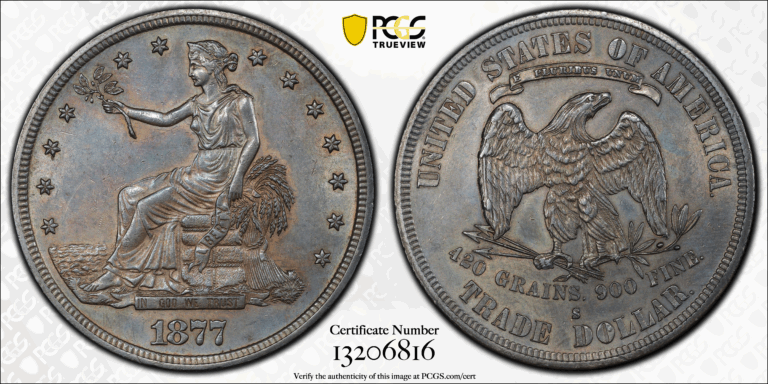
The United States trade dollar was a dollar coin minted by the United States Mint to compete with other large silver trade coins that were already popular in East Asia. The idea first came about in the 1860s, when the price of silver began to decline due to increased mining efforts in the western United…
TRANSITIONAL LINCOLN CENTS In numismatics, Transitional refers to highly collectible coins struck when the U.S. Mint altered a coin’s metal composition or design. These errors occur when leftover planchets from an older year – or unintended die designs – are mistakenly fed into the coining press alongside new issue. In this article, we will be…
COIN SPECIFICATIONS One of our club’s young numismatists asked the following question: why are U.S. coins the sizes and weights they are? The answer is that the sizes and weights of U.S. coins weren’t chosen randomly. They come from a mix of history, practicality, metal values, and standardization. Here’s the breakdown: 1. Early Coinage &…