August 2026 – The “Army & Navy” Civil War Token
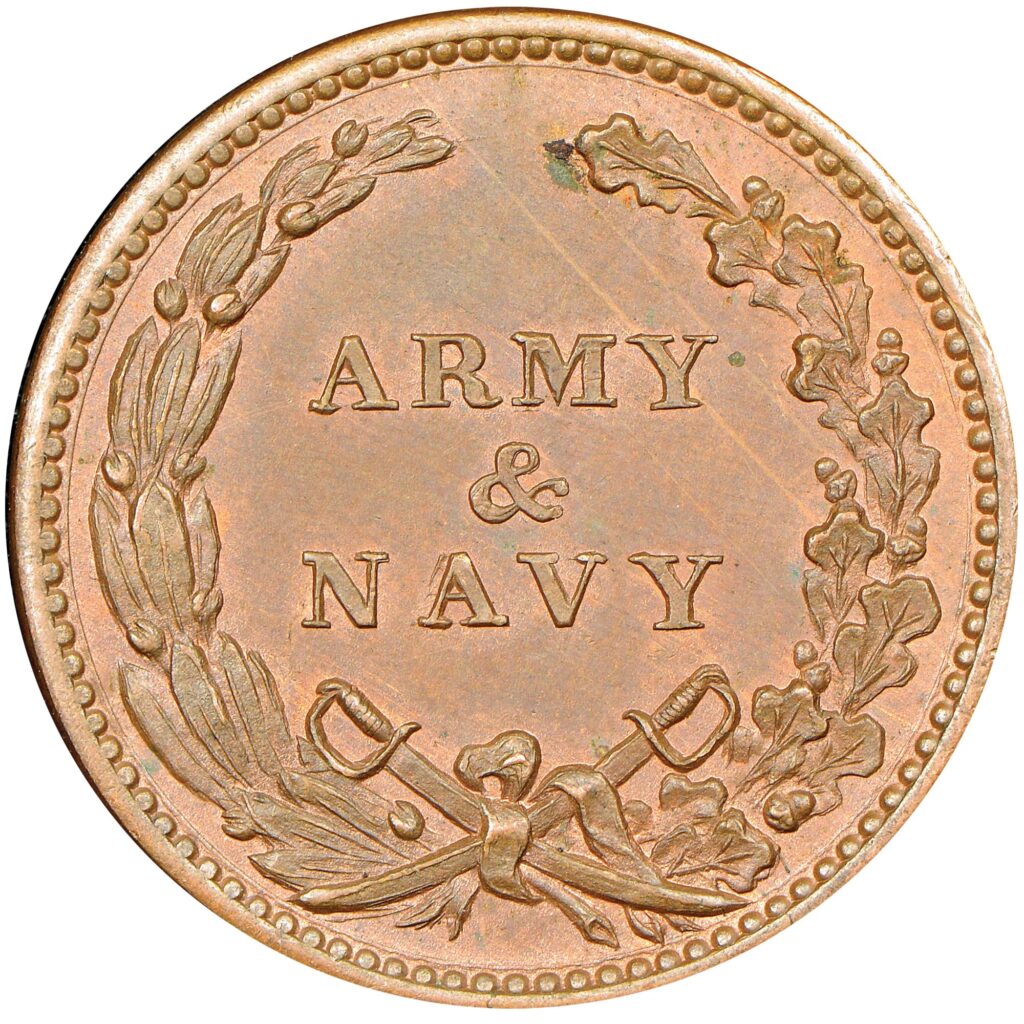
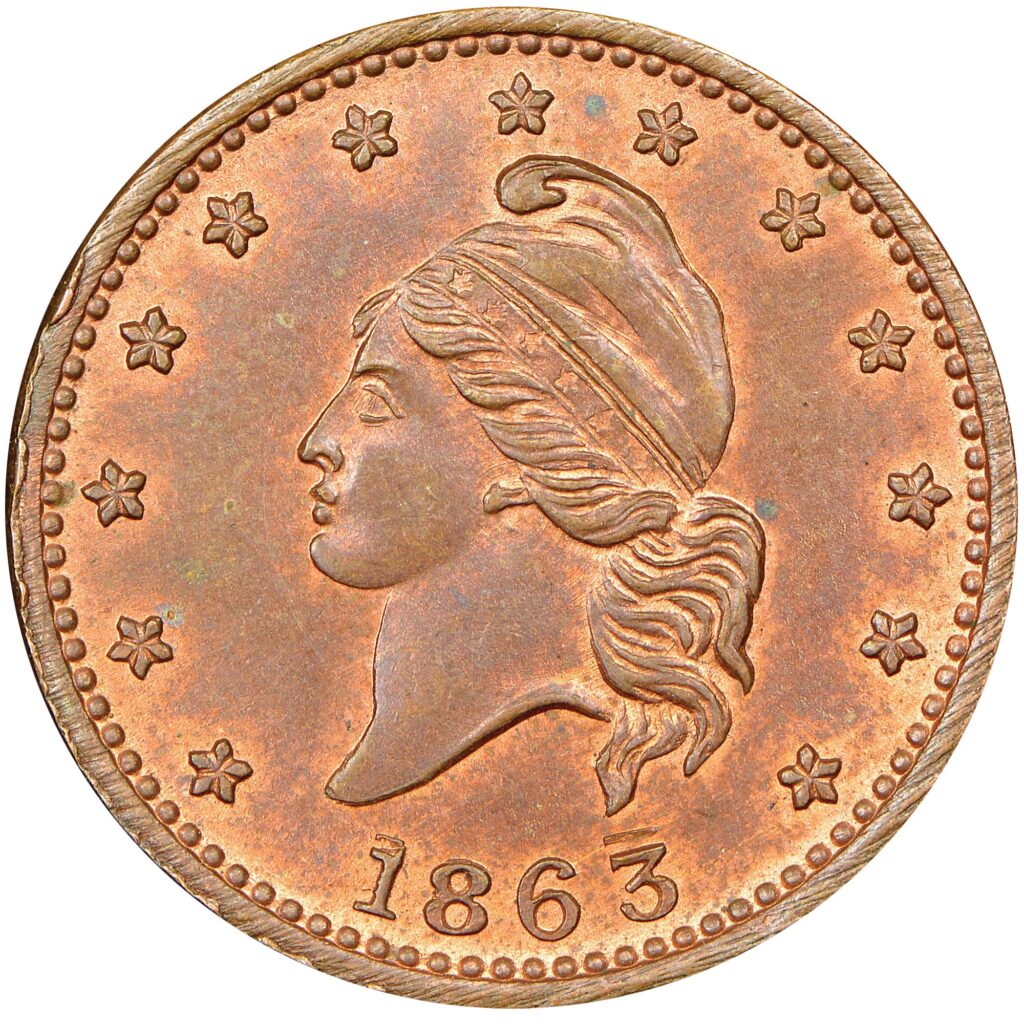
When the Civil War erupted in 1861, Americans quickly began hoarding gold, silver, and even copper coins. By 1862, small change had nearly disappeared from circulation, creating a serious problem for merchants and customers alike. To keep commerce moving, private companies stepped in and produced what we now know as Civil War Tokens.
Among the hundreds of different designs issued, none is more popular than the “Army & Navy” Patriotic Token.
The obverse features a pair of crossed American flags surrounded by the words ARMY & NAVY, symbolizing the unity of the nation’s military forces during the Civil War. The reverse carries one of the era’s most famous patriotic slogans:
THE UNION MUST AND SHALL BE PRESERVED
The phrase echoed the determination of the Northern states to keep the Union intact and reflected the strong patriotic sentiment of the time.
Unlike merchant tokens that advertised local businesses, patriotic tokens carried messages of national pride and were accepted by merchants throughout much of the North as substitutes for the scarce one-cent coin. Millions of Civil War tokens circulated between 1862 and 1864 before Congress prohibited the use of privately issued coinage.
Today, the “Army & Navy” token remains one of the most collected Civil War tokens. Because many examples survived, collectors can often purchase attractive circulated specimens for $25–$50, while uncirculated examples with original red-brown color bring considerably more.
More than 160 years after it first passed from hand to hand, the “Army & Navy” token stands as a reminder that even in a time of war and uncertainty, Americans found practical—and patriotic—ways to keep everyday commerce moving.
Collector’s Note: The standard reference for Civil War tokens is George and Melvin Fuld’s U.S. Civil War Store Cards and Patriotic Civil War Tokens. Different die combinations of the “Army & Navy” token are assigned Fuld numbers, making the series both collectible and challenging for specialists.
