General Motors Prototype Coins
Yes, you read that right: General Motors, the American car and industrial giant, made prototype coins. Well, technically they weren’t coins since they weren’t produced by the mint, but GM made prototypes for the United States mint to test out a new roller press for coin production.
In the 1960’s, the United States was experiencing a coin shortage due to an expanding economy and rising silver prices. The rising silver prices caused people to start hoarding 90% silver dimes, quarters, and half dollars. This was due to the fact that the silver in the coins was now worth more than their intrinsic face value. This caused the United States to pass the coinage act in 1965. The act changed the composition of the coins by removing the silver and going to copper-nickel clad composition for dimes and quarters. Half dollars transitioned from 90% silver to 40% silver for several years before the silver was totally removed. Also, of note from the coinage act, the mint mark was removed on all coins from 1965 to 1967 to discourage hoarding from collectors.
Due to this shortage, the mint contracted with GM to develop a roller press for coin production to help ease the shortage. This press was to be capable of producing up to 10,000 coins a minute. During the testing phase, several prototypes were produced, mostly copper cent designs. Information on the exact number of prototypes, how many were made, and how many still exist is not known. There is not a ton of information out there, and most of the information that does exist has come from former GM and mint employees. There are no known official records from GM or the mint.
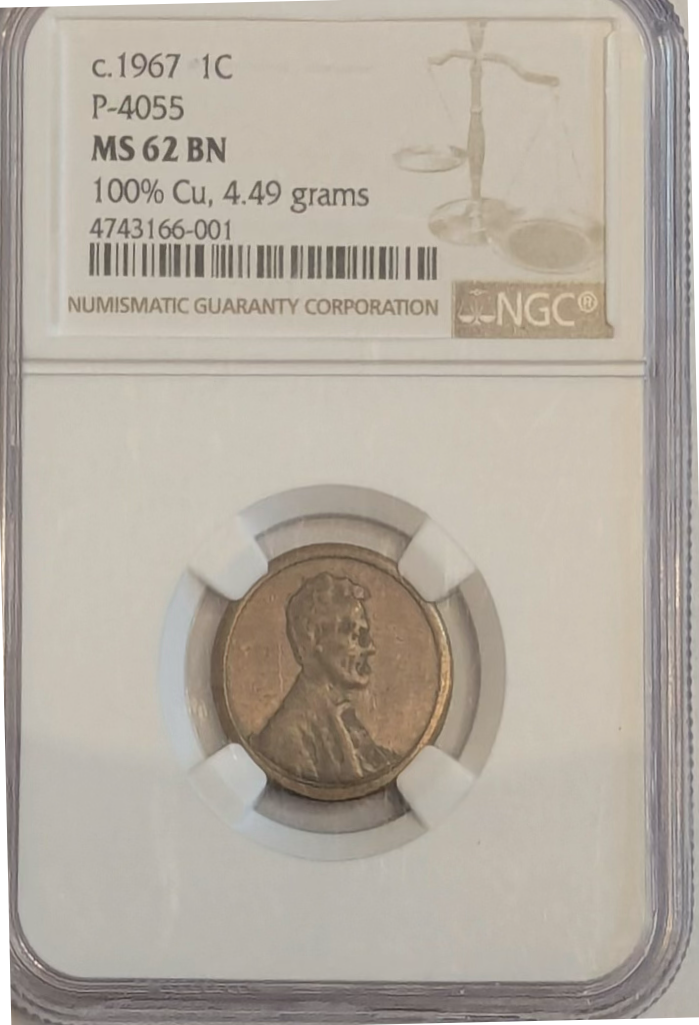
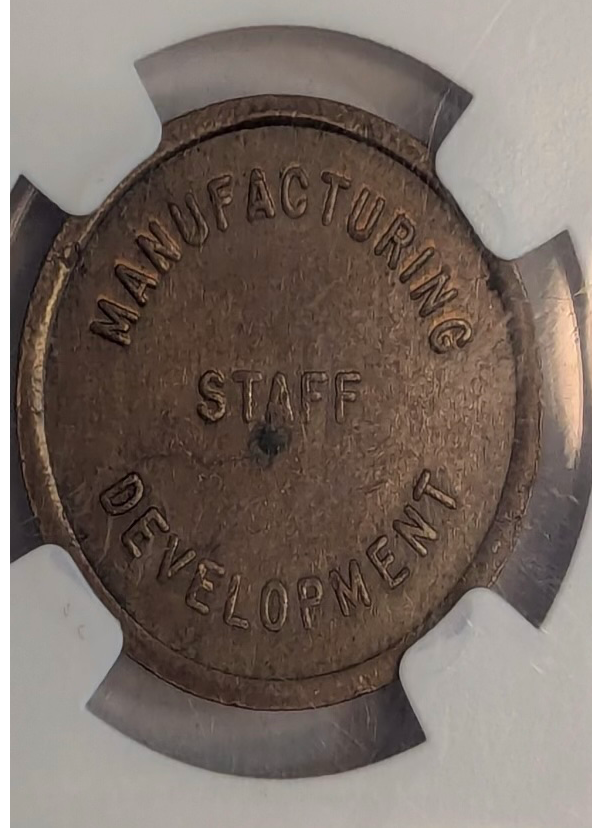
There are 3 known prototypes that were created. The oldest seems to be a GM label stamped on the obverse, followed by a Lincoln head, and finally a liberty head design. From what is known, there are several varieties of each main design. The Lincoln head, for example, has different reverses. Also, there are different planchette weights.
The Lincoln head design is interesting. It’s not entirely clear if the mint knew exactly what GM was producing. Eventually the mint saw the Lincoln head design, and there was some question on the legality of this design, even though the prototype didn’t have a year or denomination on the prototype. It was believed that this was the reason why there was a switch from the Lincoln head to the liberty head. There is conflicting information on whether or not this is true, so don’t take that as 100% true.
What also is not known is how many of these prototypes were produced and how many still exist. What seems true is the liberty head design is by far the most common. These come up at auction on a regular basis. The Lincoln head and GM prototypes appear to be much rarer. Given that the roller press could produce 10,000 coins a minute, one has to assume quite a few were produced. The question becomes then what happened to them all? Were they destroyed? It is known that many of these coins came from former GM employees.
Are there still many more out there? At this point, it doesn’t seem likely. Not many examples of the Lincoln head and GM have come through the big auction houses. Like I mentioned before, the liberty head design seems to be readily available.
In the end, the United States mint cancelled the contract with General Motors. The roller press, while capable of producing a high volume of coins in a short period of time, simply had too many issues. It was reported that there were issues with the dies cracking. The roller press needed constant maintenance, which limited the run time. Even though the roller press idea never materialized, it did produce some numismatic history that you can still collect today.